'Our boys are very patriotic.' 'They say Bharat Mata Ki Jai and Jai Hind in front of the Chinese.' 'We have never accepted their claims, we are Indians and proud to be Indians.'

'Little did those in India's strategic community realise that any wise adversary in China's place and circumstances would only take the land route to disturb and trouble India.' 'It is along the land border that all of India's post-Cold War allies would be of little or no political and diplomatic, and least of all, military help,' says N Sathiya Moorthy.

'The intrusion in Chumar, during and beyond the Chinese president's visit, is unprecedented and has qualitatively changed the tone of the India-China relationship,' says Jayadeva Ranade, a member of the National Security Advisory Board.
According to media reports in Kathmandu, China has allegedly constructed 11 buildings on the Nepalese territory in the Humla district bordering Tibet. The disputed area lies in Lampcha village of Namkha Rural Municipality in Humla district.

This is the first time Pakistan and Kashmir have been brought into the narrative.

'China is monitoring films like ours and making sure it doesn't get a platform.'

'Why assail the Tibetan leader at a time when many in China realise that the Buddhist monk is the best bet if Beijing is seriously trying to find a solution to the Tibetan issue?' asks Claude Arpi.

While praising the Indian government for cracking down on anti-Chinese activities on its soil, the Chinese Foreign Ministry has called on Tibetan spiritual leader Dalai Lama to stop indulging in separatist activities and create conducive conditions for talks with Beijing.
'Demchock and Chumar are important crucibles for both China and India to know about the other. While India 'learns,' she also need to 'teach,' suggests Lieutenant General Anil Chait, one of the Indian Army's most cerebral thinkers, who recently retired as chief of the Integrated Defence Staff.

'While wishing the Tibetan leader a long and healthy life, one can hope for a 'selection' of the Tibetan leader in the Indian Himalayas.' 'It is vital for Tibetan Buddhism, but it is also in India's political interests,' says Claude Arpi.

'Building on the potential for closer ties is the changing narrative in each country about the other. The Chinese narrative on India has become significantly more positive over the past few years,' says Walter Andersen and Zhong Zhenming.
China has just turned down India's proposal for an Indian consulate in Lhasa, Tibet. Claude Arpi reveals how India once had a full-fledged consulate general office in Lhasa, which was shut down after the 1962 war.
A sensational interview on India-China ties, with the man most qualified to answer.
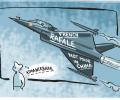
The Made in France Rafales are clearly not the best advertisement for Modi's Atmanirbhar agenda, but as long as none of its parts have Made in China embossed on them, we guess it is chaal se as the Amadavadis would say.

The video was reportedly shot at Fuyang Railway Station while the troops were preparing to head to a military camp in Hebei province, according to Taiwan News.

The former Congress president has been questioning the government over the martyrdom of Indian soldiers and has demanded answers from the prime minister.
As China marks 60 years of Tibet's 'liberation', Claude Arpi lifts the veil off the propaganda surrounding the event
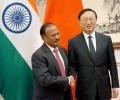
The decision was taken during the annual 19th round of boundary talks in Beijing between National Security Advisor Ajit Doval and his Chinese counterpart Yang Jiechi.

The prejudices the Chinese carry with them mean they are not natural global managers.

'All the government needs to do is to identify clear political and strategic objectives and to give the military planners a free hand,' asserts Ajai Shukla.

'China made it evident that neither the swing-ride at Ahmedabad nor the red carpet at New Delhi worked, by timing its muscle-flexing in Ladakh to coincide with Xi's visit.'
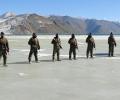
'The Arunachal border is not demarcated in that way, so there can be differing perceptions (between two sides)'

Being a pragmatist Modi is not likely to give preference to China over Japan. Both security and economic aspects are likely to shape Modi's decision in terms of engaging the two biggest economies of Asia, says Sana Hashmi.
"I think one of the things that is clear is that the Dalai Lama is not calling for independence for Tibet. He is calling for engagement with Chinese officials in dialogue. And we support that call. We very much want to see the Chinese speak with the Dalai Lama or his representatives to try and resolve many of these outstanding issues," Deputy Spokesman of the US State Department Tom Casey said.
'Once accession to Pakistan appeared unlikely, the British instituted Operations Gulmarg and Datta Khel respectively to foil possible accession to India.'

The elephant in the room will permeate the conversations, predicts Rup Narayan Das.
It is a dark legacy bequeathed by Nehru to India. In its DNA lies the subconscious fount of India's schizophrenic geopolitics that forsook in one sweep all its historically-entrenched strategic interests in Tibet in favour of China, says R N Ravi, on the 60th anniversary of the Panchsheel Agreement.

'Why did your generals try to grab a few square kilometres of Indian territory in Ladakh?' 'And what happened to the hard work that you and Prime Minister Modi put into the Wuhan and Mamallapuram meets?' Claude Arpi writes a letter to Xi Jinping, China's self-styled supreme leader, who turns 68 today, June 15.

We can make a beginning by openly acknowledging the Russian help in 1971 victory when President Putin visits India on 6 December 2021. Showing gratitude to a friend is part of our DNA, notes Colonel Anil A Athale (retd).
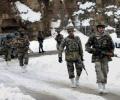
'The Chinese have been moving in step by step; inch by inch for the last 40 years.'

Outlining eight "pillars" for the future of India-China relations, President Pranab Mukherjee on Wednesday underlined the need for comprehensively resolving challenges including the boundary question through "political acumen" and "civilisational wisdom".
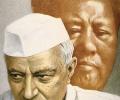
'Delhi was not concerned.' 'It would continue sleeping for several more years, with the result that Indian territory is still occupied by China today,' says Claude Arpi.

General Zhao Zongqi is well known in India for having commanded the Chinese troops during the Dokalam episode. Zhao knows every inch and corner of the Indian border, at least the Eastern and Central sectors, including the Naku La area which witnessed fist-fights between Indian and Chinese troops in April/May. Claude Arpi introduces us to the PLA generals masterminding the Chinese aggression in Ladakh.

The "bumper" 40 per cent increase followed a number of sweeping reforms intended to transform the "bloated People's Liberation Army, into a more modern, nimble fighting force".

'The impression I get is bread and butter matters more than freedom and choice. And China is providing bread and butter in plenty.' Saisuresh Sivaswamy/Rediff.com takes the road less travelled -- to Tibet.

The Tibetan spiritual leader arrived by road as his chopper could not take off from Guwahati due to inclement weather.

'The Olympic Spirit has been thrown to the wind in Xi Jinping's China.' 'The International Olympic Committee is ready to kowtow to totalitarian China,' notes Claude Arpi.
"So far Tibet is concerned, our position has all along been that the issue has to be resolved between different sections of the people of Tibet and People's Republic of China through dialogue and not through force," he said during an interaction with journalists at an orientation programme on Parliamentary reporting.

The BDCA is yet another dose of insidious placebos administered on the people of India by their own government that has been in perpetual denial over the steady incremental loss of strategic Indian territory, says R N Ravi
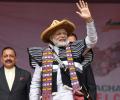
Modi's second visit to Arunachal Pradesh was vehemently opposed by China which urged India to refrain from taking any action that may "complicate" the boundary question.
 © 2026 Rediff.com - Advertise with us - Disclaimer - Privacy Policy - Sitemap - Feedback - About us - Terms of use - Grievances